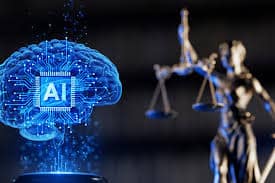
Artificial Intelligence (AI) is no longer a futuristic concept. It’s in our smartphones, our hospitals, our banks, and even in our creative industries. From generative AI models that can write essays to autonomous systems that can drive cars, AI is transforming how we work and live.
But as powerful as AI has become, it also raises serious ethical questions: How do we ensure it’s fair? Who is responsible when it goes wrong? And can we innovate without harming society?
In this article, we explore the core ethical issues of AI, real-world examples, and strategies for balancing innovation with responsibility.
1. The Promise of AI
Before diving into ethics, it’s important to understand why AI is so attractive to businesses, governments, and individuals.
Benefits:
- Efficiency & Automation: AI handles repetitive tasks faster and more accurately than humans.
- Innovation: Powers breakthroughs in healthcare, climate modeling, and scientific research.
- Accessibility: Assists people with disabilities through voice control, predictive text, and smart devices.
Example:
In healthcare, AI is now capable of detecting diseases like cancer with accuracy rates equal to — or sometimes exceeding — human doctors.
2. The Core Ethical Concerns
While AI offers benefits, it also introduces challenges that must be addressed to prevent harm.
a. Bias and Discrimination
AI models are trained on data that can contain hidden biases. If not addressed, this can lead to discriminatory decisions in hiring, lending, policing, and more.
Example:
A hiring algorithm once favored male candidates over female ones because it was trained on a dataset dominated by men in tech.
b. Privacy and Surveillance
AI thrives on data — often personal data. Without proper safeguards, it can become a tool for mass surveillance.
Example:
Facial recognition technology has been criticized for tracking people without consent and misidentifying individuals from minority groups.
c. Job Displacement
Automation can lead to significant job losses in certain industries, creating economic and social instability.
Example:
Self-checkout machines and automated warehouses reduce the need for human cashiers and stock clerks.
d. Accountability
When AI makes a decision, who is responsible? The developer? The company using it? Or the AI itself?
Example:
If a self-driving car causes an accident, legal systems struggle to assign liability.
e. Misinformation & Deepfakes
Generative AI can create realistic but false content, which can be used for scams, fake news, and political manipulation.
Example:
Deepfake videos have been used to impersonate celebrities and political figures.
3. Frameworks for Ethical AI
Addressing these concerns requires clear frameworks and guiding principles.
Common Ethical AI Principles:
- Transparency: AI systems should be explainable and understandable to users.
- Fairness: Avoid biased training data and ensure equitable outcomes.
- Accountability: Define clear responsibility for AI actions.
- Privacy: Limit data collection and ensure secure storage.
- Safety: Minimize risks of unintended harm.
4. Real-World Efforts to Regulate AI
Governments, industry leaders, and advocacy groups are working to create standards for AI ethics.
Key Examples:
- EU AI Act (2024): The first comprehensive AI regulation, classifying AI systems based on risk.
- US Blueprint for an AI Bill of Rights: Focused on privacy, transparency, and human oversight.
- UNESCO AI Ethics Recommendation: Adopted by 193 countries to guide responsible AI use globally.
5. Balancing Innovation with Responsibility
The challenge is ensuring that ethics do not stifle innovation, but rather guide it.
Strategies:
- Ethics-by-Design: Build ethical safeguards into AI from the start.
- Interdisciplinary Teams: Combine tech experts with ethicists, lawyers, and sociologists.
- Continuous Monitoring: Audit AI systems regularly for bias, accuracy, and safety.
- Public Engagement: Include citizen voices in AI policy discussions.
6. The Role of Businesses
Companies are on the front lines of AI deployment. To build trust and avoid backlash, they should:
- Publish AI ethics guidelines.
- Create internal AI ethics boards.
- Provide user consent and opt-out options.
- Commit to transparent AI decision-making.
Example:
Microsoft’s Responsible AI Standard outlines requirements for fairness, reliability, and inclusiveness in all AI products.
7. The Role of Individuals
As AI becomes part of daily life, individuals also play a role in its ethical use:
- Verify information before sharing online.
- Use AI responsibly and avoid harmful applications.
- Stay informed about privacy settings and data rights.
8. Future Challenges in AI Ethics
Looking ahead, emerging AI capabilities will create new ethical dilemmas:
- Autonomous Weapons: Should machines make life-or-death decisions?
- Superintelligent AI: How do we align powerful AI with human values?
- Synthetic Biology Integration: Could AI-driven bioengineering pose risks to public health?
9. Why This Matters Now
If AI ethics are ignored:
- Discrimination could become automated and invisible.
- Privacy could disappear entirely.
- Innovation could be driven solely by profit, not public good.
If AI ethics are embraced:
- Technology could lift millions out of poverty.
- Healthcare, education, and climate solutions could advance rapidly.
- Trust in innovation would grow, ensuring long-term progress.
10. Conclusion: A Shared Responsibility
The future of AI isn’t just in the hands of coders — it’s in the hands of governments, businesses, communities, and individuals.
Balancing innovation with responsibility means recognizing that technology should serve humanity, not replace it. With thoughtful design, transparent policies, and public participation, AI can be a force for good that transforms society for the better.
Editor’s Note: Read The Rise of AI in Newsrooms: How Technology is Changing Journalism for a closer look at AI’s role in media.
GET OUR GUIDE BOOKS BELOW
1. Mastering Seduction: How Men Create Desire Without Chasing or Begging
Stop chasing.
Start being chased.Stop chasing and start being chosen
This is more than a book—it’s your blueprint for becoming the man women are drawn to, remembered, and obsessed with.
🔥 Don’t wait—get your copy now and start transforming your love life today! 👇👇👇
https://nomorewastedman.gumroad.com/l/MasteringSeduction2. Magnetic Texting: How to Spark Attraction Through Every Message
Stop overthinking your texts.
Stop sending paragraphs.
Stop double texting.
Stop chasing women who reply with “lol.”Your problem is not women.
It’s how you text.Every message either builds attraction…
Or kills it.Become the man whose phone buzz makes her smile.
Not the man she replies to when she’s bored.MEN, FIX YOUR GAME. SAVE YOUR OPTIONS.
⚡ Get your copy now and learn how to spark attraction through every message:
👉 https://nomorewastedman.gumroad.com/l/MagneticTexting3. What Women Really Want in a Man: The Alpha Traits Women Respect and Desire
You’re not ignored because you lack looks.
You’re ignored because attraction grows from certainty — not compliance.
Inside this guide you’ll learn:
✅ The alpha mindset without toxic dominance
✅ How to lead without controlling
✅ Why women follow men with purpose
✅ Emotional control that builds respectBecome the man she doesn’t question — she trusts.
👉 Get the book now.
https://nomorewastedman.gumroad.com/l/WhatWomenReallyWant