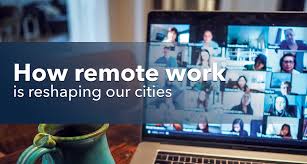
The COVID-19 pandemic didn’t just change the way we work — it transformed the geography of work itself. Remote jobs, once a niche perk, have become a mainstream employment model, fundamentally altering where people live, how cities operate, and what the future of urban economies might look like.
In 2025, the “work-from-anywhere” era is still evolving, and its impact on cities around the world is profound.
1. The Rise of Remote Work as a Permanent Model
Before 2020, only a small percentage of the workforce worked remotely full-time. Today, millions of employees log in from home offices, coffee shops, and co-working spaces.
Why It Matters:
- Companies save on office real estate costs.
- Employees enjoy greater flexibility and work-life balance.
- Talent pools have expanded beyond city limits.
Stat Snapshot (2025):
- 35% of all professional jobs in developed economies are now remote or hybrid.
- Major corporations like Microsoft, Shopify, and Twitter (now X) have permanent remote-first policies.
2. Migration Away from Expensive Urban Centers
One of the most visible effects of remote work has been population shifts away from high-cost metropolitan areas.
Examples:
- In the U.S., workers left cities like San Francisco and New York for mid-sized cities such as Austin, Nashville, and Boise.
- In Europe, remote workers have boosted populations in Portugal, Spain, and rural France.
- In Asia, smaller tech hubs like Chiang Mai (Thailand) and Da Nang (Vietnam) are attracting digital nomads.
Impact on Cities:
- Big cities lose some tax revenue and demand for expensive housing.
- Smaller cities see economic revitalization — but also risk housing shortages if growth is too fast.
3. Commercial Real Estate Faces Reinvention
With fewer workers commuting daily, demand for traditional office space has declined.
Trends in 2025:
- Companies downsizing headquarters to smaller, collaborative spaces.
- Conversion of office buildings into residential apartments or mixed-use developments.
- Growth of flexible co-working brands like WeWork, Industrious, and local niche operators.
Why This Matters Economically:
Urban cores are rethinking zoning laws to adapt to a hybrid economy.
4. The “15-Minute City” Movement Gains Momentum
As commuting declines, more cities are exploring the concept of a 15-minute city — where all essential services (work, shopping, healthcare, leisure) are within a 15-minute walk or bike ride.
Benefits:
- Reduced traffic congestion.
- Lower carbon emissions.
- Stronger community engagement.
Cities Leading the Way:
Paris, Melbourne, Portland, and Bogotá are experimenting with urban redesigns to meet this vision.
5. Local Economies See Both Winners and Losers
Remote work redistributes spending power in ways that help some businesses and hurt others.
Winners:
- Suburban and rural coffee shops, co-working spaces, and restaurants.
- Local service industries in smaller cities.
Losers:
- Downtown lunch spots, dry cleaners, and transport services that relied on office workers.
- Urban retail chains in commuter-heavy districts.
Key Takeaway:
Urban planners must find ways to attract foot traffic back to central districts while supporting emerging suburban hubs.
6. Global Competition for Remote Talent
Remote work erases borders for knowledge-based jobs, allowing companies to hire talent anywhere.
Effects on the Job Market:
- Workers in lower-cost countries can now compete for high-paying roles traditionally based in New York, London, or Sydney.
- Wage differences between regions may narrow over time.
- Employers must offer competitive salaries and benefits to attract top talent, regardless of geography.
7. Infrastructure and Technology Upgrades
Cities that want to attract remote workers must invest in connectivity and amenities.
Examples of Investments:
- Expanding high-speed internet to rural areas.
- Building public co-working spaces in libraries and community centers.
- Improving public transport and green spaces for lifestyle appeal.
Why This Matters:
A city’s ability to draw remote professionals can shape its economic future.
8. Cultural Shifts in Urban Life
Remote work is changing not just where people live, but how they live.
- More daytime activity in neighborhoods, as people no longer commute away.
- Growth in community events, local volunteering, and neighborhood businesses.
- Decline in traditional rush-hour patterns, affecting transport systems.
Social Impact:
Cities may become more localized and community-focused, but risk losing the vibrancy of densely packed business districts.
9. Policy and Taxation Challenges
With workers spread across regions, governments face new questions:
- Where should remote workers pay taxes — where they live or where their employer is based?
- How can cities replace lost transit and parking revenue?
- Should governments offer incentives to attract remote workers?
Example:
Countries like Estonia, Barbados, and Portugal have launched digital nomad visas to attract long-term remote residents.
10. What the Future Holds: Cities of 2030 and Beyond
The remote work revolution is still unfolding. By 2030, we may see:
- Hybrid mega-hubs: Cities retaining corporate presence but with fewer full-time office workers.
- Decentralized economies: More balanced distribution of wealth and opportunity across regions.
- Globalized neighborhoods: Communities with residents from all over the world, connected digitally.
Practical Tips for Cities Adapting to Remote Work
- Revitalize Downtowns: Convert empty offices into housing, arts spaces, or indoor markets.
- Incentivize Co-Working: Offer tax breaks for shared workspaces in underused areas.
- Enhance Digital Infrastructure: Make high-speed internet a basic utility.
- Promote Local Living: Encourage residents to shop, dine, and spend locally.
Conclusion: A New Urban Era
Remote work is more than a workplace trend — it’s a societal shift that is reshaping cities, economies, and lifestyles worldwide.
For some cities, this means a renaissance of community-driven growth. For others, it’s a challenge to reinvent themselves in the face of declining downtown activity. The winners in this new era will be the places that combine digital connectivity with livable, people-centered design.
GET OUR GUIDE BOOKS BELOW
1. Mastering Seduction: How Men Create Desire Without Chasing or Begging
Stop chasing.
Start being chased.Stop chasing and start being chosen
This is more than a book—it’s your blueprint for becoming the man women are drawn to, remembered, and obsessed with.
🔥 Don’t wait—get your copy now and start transforming your love life today! 👇👇👇
https://nomorewastedman.gumroad.com/l/MasteringSeduction2. Magnetic Texting: How to Spark Attraction Through Every Message
Stop overthinking your texts.
Stop sending paragraphs.
Stop double texting.
Stop chasing women who reply with “lol.”Your problem is not women.
It’s how you text.Every message either builds attraction…
Or kills it.Become the man whose phone buzz makes her smile.
Not the man she replies to when she’s bored.MEN, FIX YOUR GAME. SAVE YOUR OPTIONS.
⚡ Get your copy now and learn how to spark attraction through every message:
👉 https://nomorewastedman.gumroad.com/l/MagneticTexting3. What Women Really Want in a Man: The Alpha Traits Women Respect and Desire
You’re not ignored because you lack looks.
You’re ignored because attraction grows from certainty — not compliance.
Inside this guide you’ll learn:
✅ The alpha mindset without toxic dominance
✅ How to lead without controlling
✅ Why women follow men with purpose
✅ Emotional control that builds respectBecome the man she doesn’t question — she trusts.
👉 Get the book now.
https://nomorewastedman.gumroad.com/l/WhatWomenReallyWant